
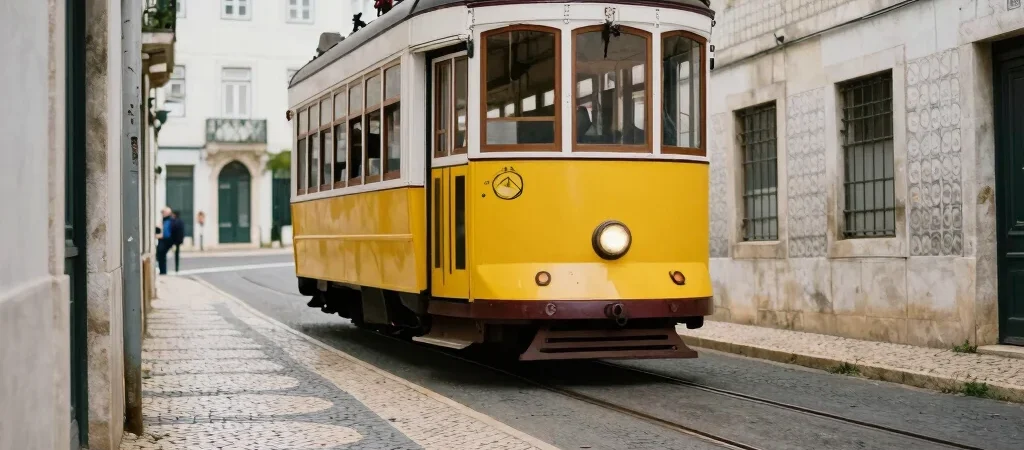
The tram rounds the corner with a bell and a shiver of yellow paint, and the street is suddenly quiet again. In Lisbon, I often find that the best part of following a famous route is the stretch after the car has gone, when the city settles back into its ordinary rhythm.
Let the Hill Set the Pace
Lisbon asks something of your legs. The pavements rise and dip, and the patterned calçada can be slick underfoot, so I’ve learned to look up from the map and take the climb in pieces.
A landing beside a tiled façade becomes a reason to stop. So does the cool edge of a doorway or the small square of sky between two rooftops. None of these pauses is a destination, exactly, but they give the walk its shape.
After the Tram Passes
The tram is easy to photograph; the minutes around it are harder to carry home. I remember a shopkeeper sweeping the pavement, laundry moving above the street, and the abrupt shade where a narrow lane turned away from the afternoon sun.
Those details don’t compete with the view from a miradouro. They make the view feel connected to a lived-in city rather than a picture arranged for me. When I travel, that connection is what I’m hoping to notice.
A Walk Without a Finish
If you visit, leave one part of the day without a pinned endpoint. Choose a direction, keep enough time to stop, and let the next street be a decision you make when you get there.
You may still end up at the famous view. But you’ll have a few smaller scenes to remember alongside it—and sometimes those are the ones that bring a place back most clearly.