
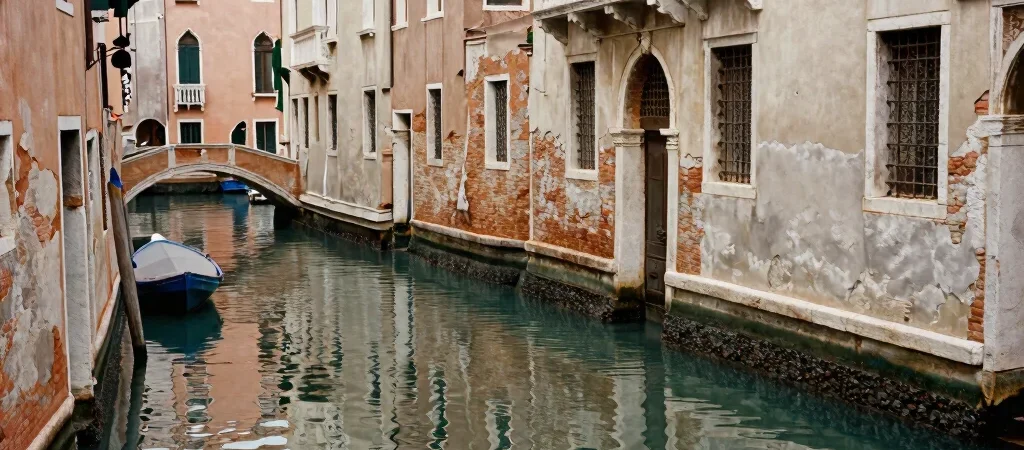
The first thing I remember from Venice is not a square or a façade, but water moving under a bridge. It caught the buildings in broken pieces, so the city seemed to be there twice: once above me, and again in the restless surface below.
Look Below the Balconies
Venice gives the eye plenty to reach for, from stone doorways to balconies crowded with detail. But the canals keep shifting the view, turning a familiar wall into a pattern of light and dark that changes with every passing boat.
I found myself watching the edges: the tide line on a step, a mooring rope tightening, the reflection trembling against an old wall. The details were small, but they made the city feel less like a scene I had arrived to see and more like a place in motion.
A City at Walking Speed
On foot, Venice has a way of interrupting a straight line. A bridge sends you up and over; a lane narrows, then opens onto water. I stopped trying to make every turn efficient and started treating the detours as part of the story.
That shift changed what I noticed. Instead of measuring the day by how many landmarks I reached, I remembered the sound of footsteps on stone and the quiet that gathered in a passage just beyond a busy crossing.
Make Room for the In-Between
In a city so often represented by its grandest views, it helps to leave a little time for the spaces between them. Walk without rushing to the next square, and look down as often as you look up.
The photographs I expected to remember are still there in my mind. But when I think of Venice, I return first to the moving water and the changing reflections—a reminder that a place is never only its most recognizable image.